In 2008, AG Moses Ssebaggala, a social worker, together with members of his organisation, Shared Love, was invited to Makukuba Village in Nabbale, Mukono District to speak about parenting and to share the word of God. Through door-to-door visits and interaction with parents, the team uncovered a troubling reality: girls, some as young as thirteen, were being married off to much older men. Shocked and deeply disturbed, they decided to carry out a survey across more than 200 homes, focusing on family structure, health, marriage, education, and income.
The findings were devastating. The illiteracy rate stood at over 86%, largely because the community lacked a nearby school.
Later, while away in Kapchorwa on a working trip, Moses received tragic news. Two children from Makukuba Village had drowned in a flash flood while walking six kilometres to the nearest school in Nakifuma. The incident ignited a wave of grief and determination. The community resolved to act.
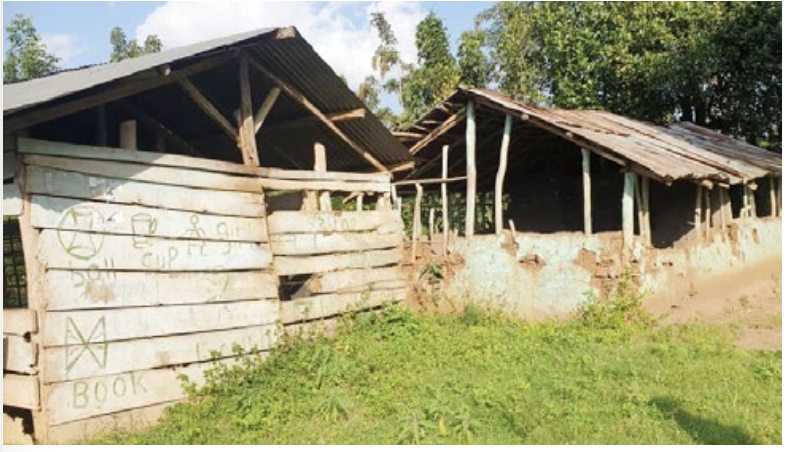
With the support of Shared Love, friends, village leaders, and parents, they rallied resources to build a school. Using papyrus reeds and eucalyptus poles, they constructed a shelter that housed two classrooms. On opening day, the sight was overwhelming: 300 children turned up, eager to learn. The school began with nursery and primary one classes — a humble beginning, but a powerful step toward transforming Makukuba’s future.
Growth of the Shared Love School
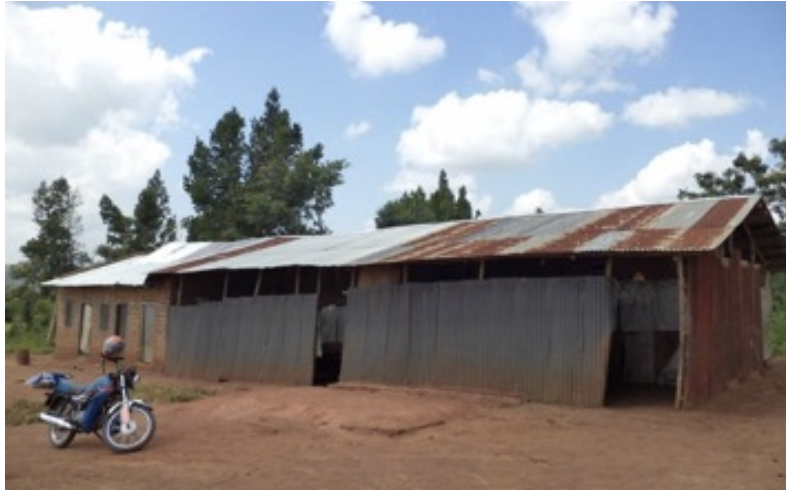
The school would gradually expand, with a new classroom built each year, and was later upgraded to a tin shelter. Despite these humble beginnings, the Shared Love School was officially registered with the Ministry of Education and Sports. The school became a symbol of hope, inspiring the community and drawing more children each day to its doors.
As it flourished, the number of child marriages declined, and families began to appreciate the value of education. The teaching staff served with dedication and commitment, giving themselves fully to the children despite the financial challenges Shared Love faced in paying teachers’ salaries and securing essential school resources. When the community saw their children learning to read and write, they were inspired to dream even bigger — and soon began laying bricks for the construction of a permanent structure.
Enter the Rotary Club of Kasangati
In 2014, Moses joined the Rotary Club of Kasangati. His story of Shared Love in Makukuba touched hearts and inspired three members — his mentor Fredrick Kakaire, Elizabeth Ssempebwa, and John Kizza Ssali — to visit the village and explore partnership opportunities with the school.
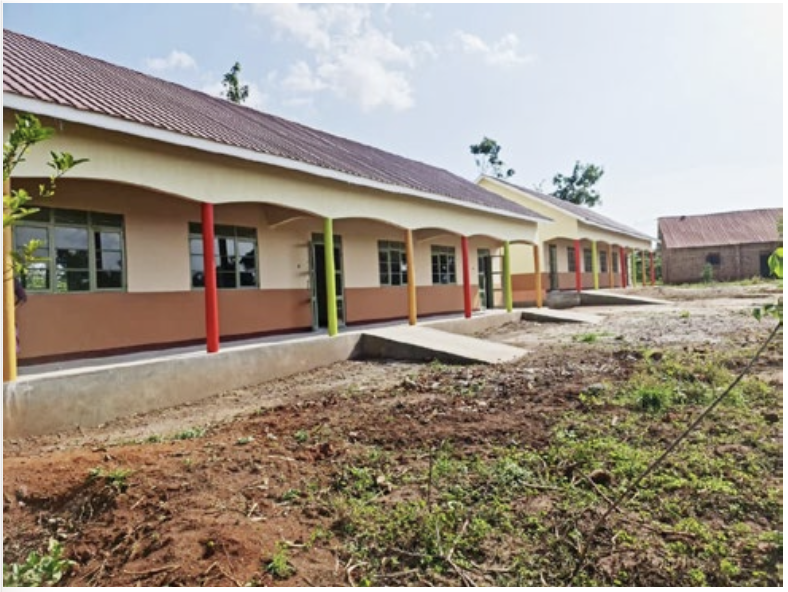
The following year, 2015, under the leadership of President Florence Kanyike, the club constructed its first classroom. In 2016, with President Julie Kamuzze Musoke at the helm, two additional classrooms were built, gradually moving students out of makeshift shelters and into permanent buildings. President Julie, together with other World Class Presidents, went further to install a 10,000-liter rainwater harvesting tank after realizing students were losing valuable learning hours fetching water for school activities.
Continued Expansion and Support
The momentum only grew. In the 2016–2017 Rotary Year, President Sophie Nuwagira Bamwoyeraki, with support from Hariss International, oversaw the addition of a second block comprising three large classrooms, offices, and a bookstore. Around the same time, the school received textbooks from the Second Wind Foundation in Texas. The following year (2017–2018), Dr. Jennifer Baluka continued the collaboration with Hariss International to complete the first classroom block by finishing floor screeding and fitting shutters. With two modern blocks now in place, the school’s appeal and enrollment rose even further.
In 2018–2019, under President Mildred Bahemuka, the club partnered with the Rotary Club of San Luis Obispo, USA, to construct a third block with two large classrooms. That same year, a global grant with RC Brynmawr brought six boreholes to the community, enhancing access to clean water. In 2019–2020, under President Elizabeth Ssempebwa, the club added a multi-purpose classroom block that doubled as a meeting hall, while Hariss International boosted student comfort by donating shoes and sports uniforms.
By this time, the school stood on four strong classroom blocks, well-equipped to serve its growing student population. With Makukuba steadily transformed, attention turned to Gonve, a neighboring village. During the Change Maker year, under President Paul Nampala, the club, in partnership with Rotary Club Jayhawk (USA) and Hariss International, built two classroom blocks — transforming the Gonve school into a spacious and well-structured learning facility.
Planning for the Future
Recognizing that many children could not continue to secondary school due to financial difficulties, Shared Love laid plans for a secondary school and vocational institution to bridge the gap. Today, that vision is taking shape.
Shared Love Primary School has now hosted the Primary Leaving Examinations (PLE) for three consecutive years, with about 40 pupils sitting each year. The secondary school has grown to a population of 85 students, while the primary school accommodates 353 pupils. Together with the Rotary Club of Kasangati, Shared Love has also constructed a health centre to serve children who fall ill during school hours, as well as a labour ward that supports more than ten mothers daily in a community that once had no health facility nearby.
As permanent classrooms in Makukuba and Gonve — under the stewardship of Rotarians Fredrick Kitandwe and Arthur Kizito — continue to fill with eager learners, the ripple effect of progressive education in the area has become undeniable. It stands as proof that Rotary can change lives and transform communities.
Local government officials now regularly visit the schools, recognizing Shared Love Schools as a model of Rotary, corporate, and grassroots partnership in action. What began with papyrus shelters, later tin structures, has grown into a lasting legacy of hope, posterity, and opportunity.
Education has become the foundation for change — reducing child marriage, inspiring families to invest in their children’s futures, and proving that investing in children yields endless rewards. The cycle of possibility continues, promising brighter generations to come.